8 Document Camera and Smart Classroom Products Ready for OEM Customization
Ruyden supports distributors, tender buyers, AV integrators, and private-label brands with a connected product matrix: document cameras, interactive panels, kiosks, digital lecterns, and conference cameras. The eight models below are export-ready starting points. Product URLs are retained exactly; final configuration can be customized around your market, software ecosystem, packaging, and certification requirements.
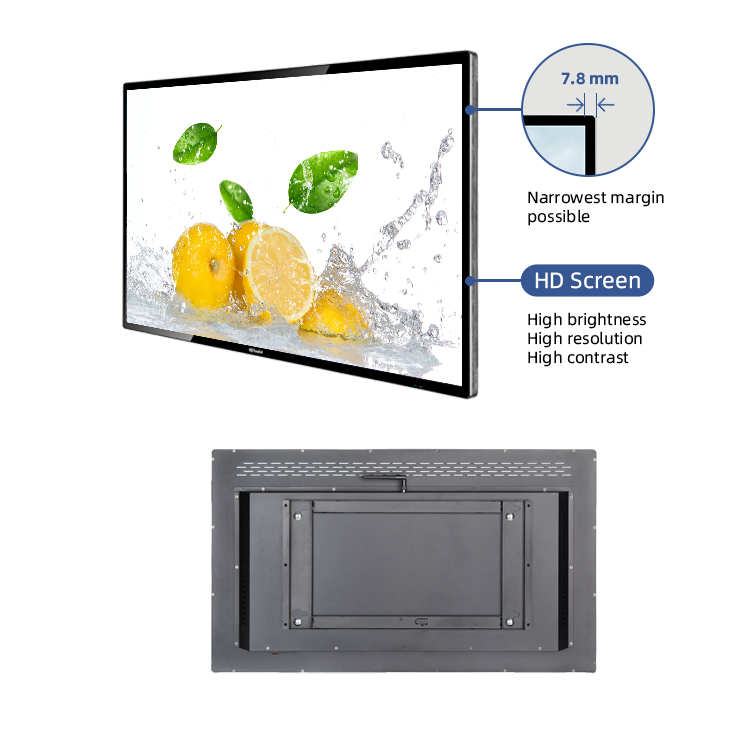
Interactive Touch Screen 10/13/15/22/32/43/49/55/65 Inch Android LCD Monitor Kiosk Wall Mounted Advertising Display
A flexible Android touch display family for campus wayfinding, admissions promotion, meeting-room booking, and wall-mounted information delivery.
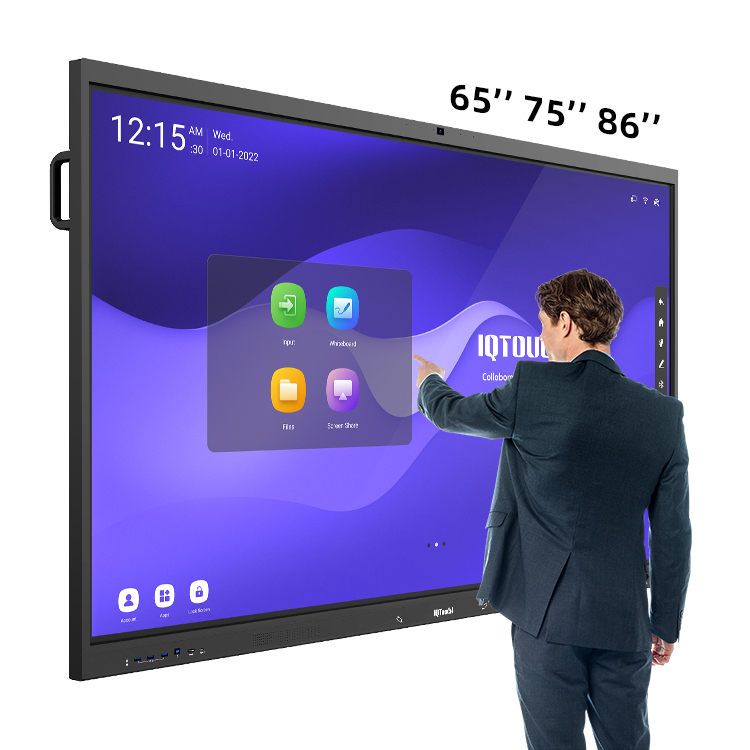
Dual System 4K 65 75 86 Inch Smart Board Interactive Electronic Whiteboard for Education and Conference
A dual-system 4K interactive board for classrooms and conference rooms, pairing multi-touch whiteboarding with a familiar Android and Windows workflow.
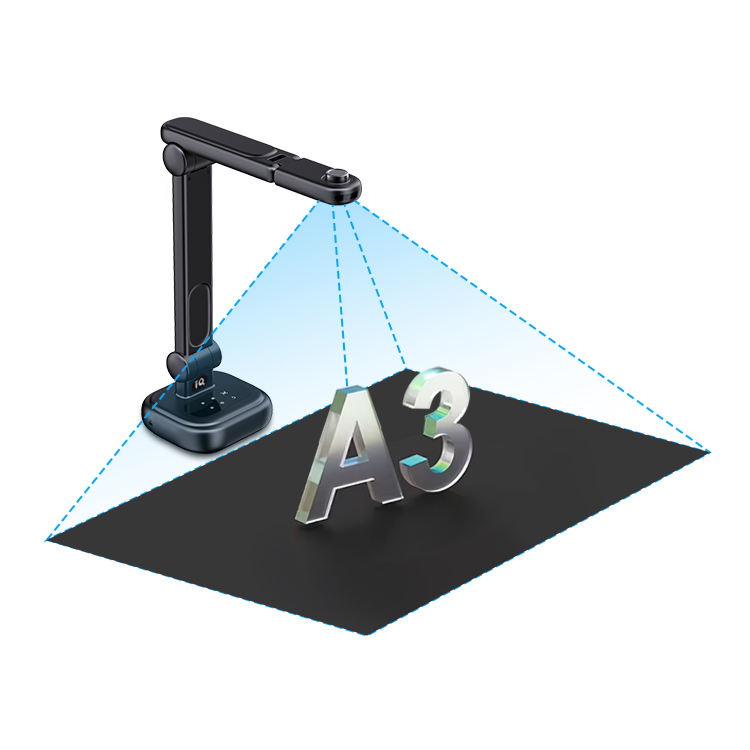
4K Camera Folding Design Live Annotation Adjustable LED Lighting Dual Stream A3 A4 Document Book Camera Scanner
A core teaching visualizer with folding form factor, live annotation, adjustable LED lighting, and dual-stream output for in-room and remote learners.
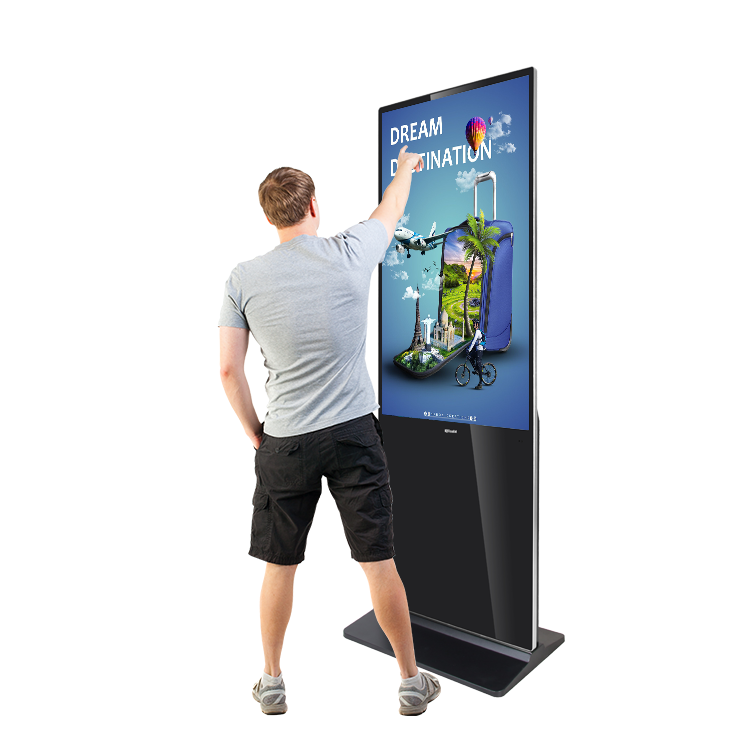
Wholesale 43inch Android Tablet Floor Standing Touch Kiosk for Hotel Bank School
A freestanding 43-inch Android touch kiosk for admissions, reception, library service, event registration, and self-service campus information.
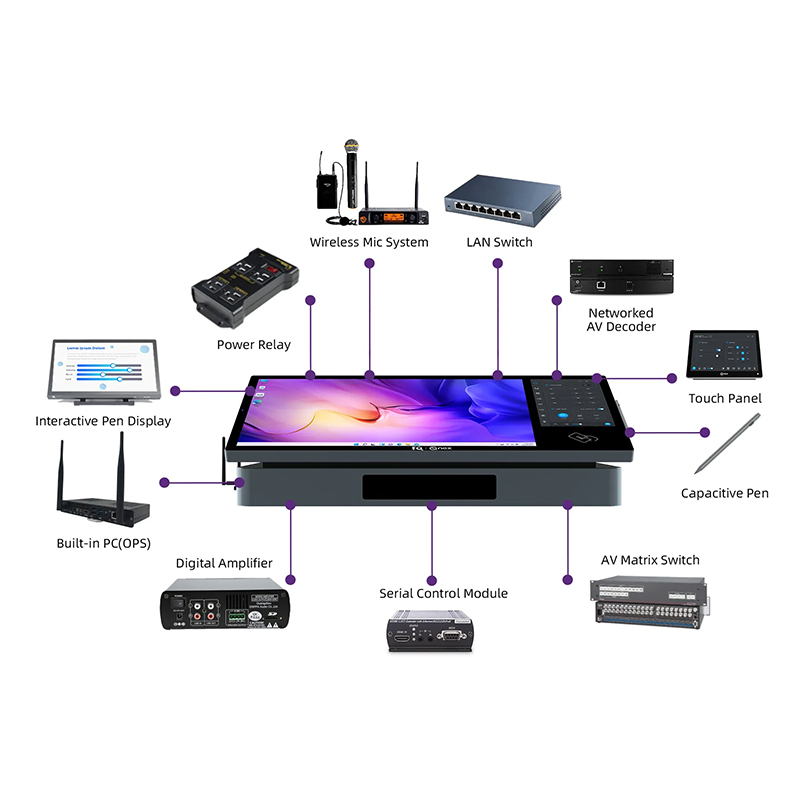
Android System Education Classroom Control Smart Digital Lectern Desktop Digital Podium
A smart digital lectern that consolidates classroom control, presentation switching, and AV operation into a teacher-friendly desktop podium.
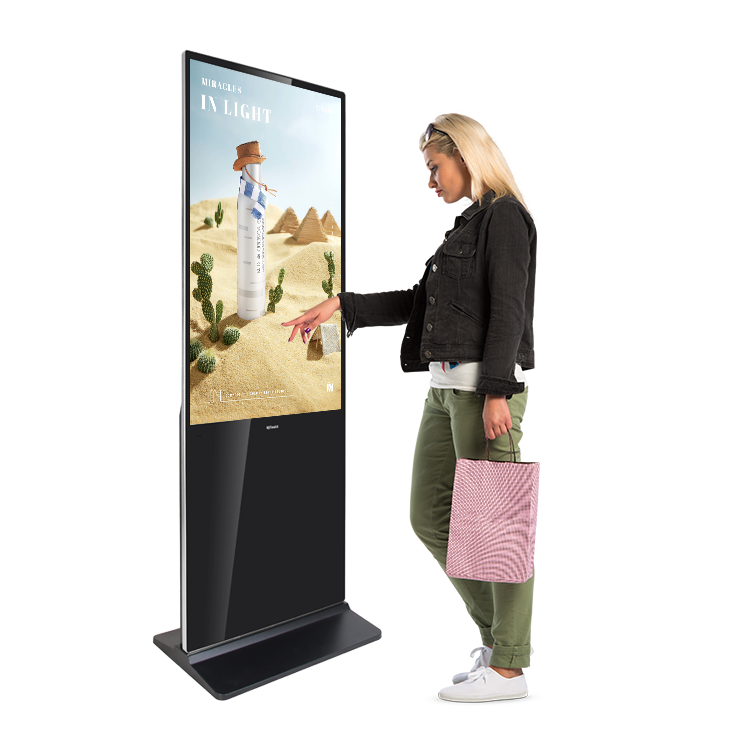
Android and Windows System Standing Floor Stand Information Kiosk Touch Screen for Shopping Mall
An Android and Windows floor-standing information kiosk for high-traffic public spaces, campus navigation, retail promotion, and service counters.
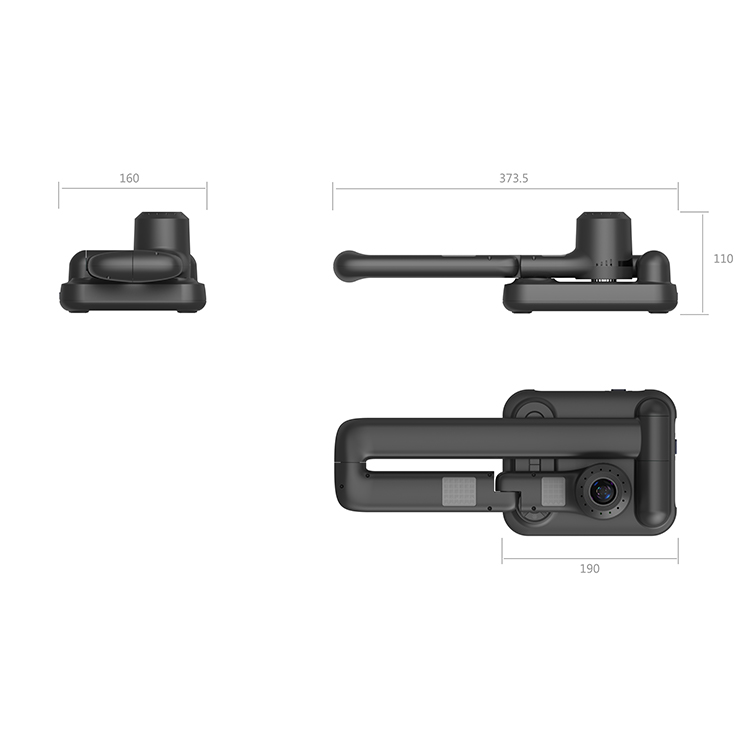
Extra Large Coverage 4k Camera 10x Optical Zoom Foldable Flatbed High Speed A4 Document Scanner Kiosk
A high-resolution document scanner kiosk with 10x optical zoom, extra-large coverage, and foldable flatbed design for detailed demonstrations and fast capture.
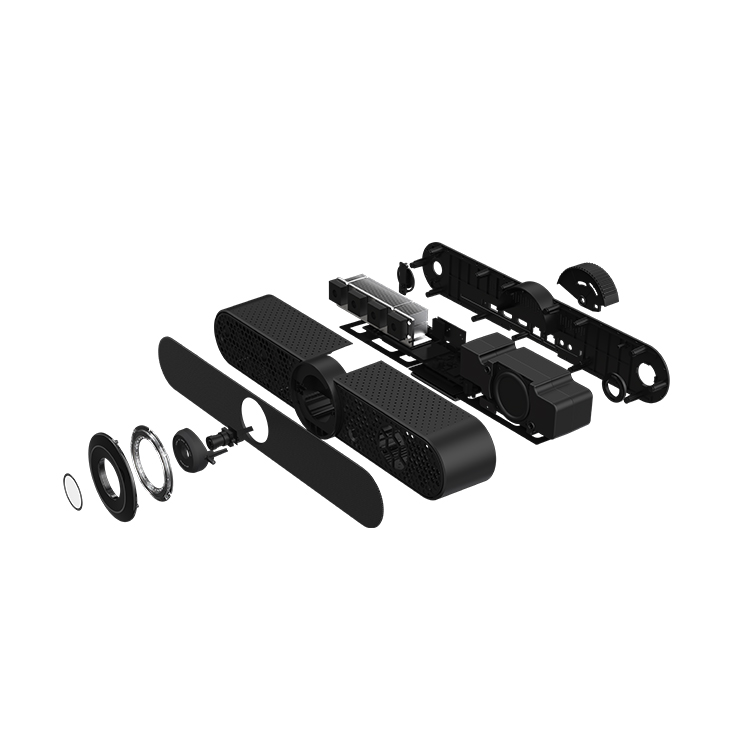
AI Auto-Tracking Webcam All-in-one 1080p 4k PC Mini Webcam for Video Calling and Conference
A compact AI auto-tracking webcam for hybrid classes, lecture capture, and conference rooms where presenter movement and plug-and-play setup matter.
Need a mixed container, private-label housing, or a tender-specific bundle? Use the inquiry button and share your target market, room list, and estimated quantity.
Why a Teaching Document Camera Is Becoming Core Classroom Infrastructure
The document camera is no longer a single-purpose accessory. It is becoming the visual input layer for STEM demonstrations, handwriting instruction, textbook close-ups, lab procedures, design reviews, and remote learner engagement.
A teaching document camera, also called a visualizer or document scanner camera, solves a practical classroom problem: the teacher needs to show small details to a large room and to learners joining remotely. A conventional fixed webcam can capture a face, but it often cannot capture a textbook page, a circuit board, a science experiment, or a handwritten calculation with enough clarity. A dedicated visualizer with a high-resolution sensor, optical zoom, flexible arm or folding structure, LED lighting, and live annotation creates a more reliable teaching workflow.
For OEM buyers, the sourcing question is broader than the camera head. The real requirement is a repeatable classroom system: stable firmware, predictable image quality, easy service access, compatible mounting, clear software documentation, and a factory that can support customization without creating supply risk. This is why experienced distributors and tender committees increasingly evaluate document camera manufacturers on engineering discipline, test evidence, and long-term model continuity rather than on a single specification sheet.
Ruyden approaches this category from an integrated education AV position. Our wider product matrix includes interactive flat panels, interactive whiteboards, lecture capture systems, networked digital podiums, wireless presentation, and AV control. That matters for document camera procurement because a visualizer is often purchased with a display, podium, capture camera, and room-control system. A supplier that understands the whole classroom reduces compatibility risk and simplifies after-sales responsibility.
Six Purchasing Trends Reshaping Document Camera and Smart Classroom Procurement
Buyers are shifting from isolated device purchasing to outcome-based sourcing. The strongest tenders now ask for interoperability, lifecycle support, and evidence of quality control.
Tender-ready bundles replace single-item buying
Schools and universities increasingly bundle document cameras with displays, podiums, and capture systems. A manufacturer that can supply a coordinated ecosystem reduces integration work for distributors and simplifies acceptance testing for the end user.
Total cost of ownership becomes a board-level metric
Procurement teams are calculating installation time, teacher training, spare-parts availability, warranty handling, and software updates. A low unit price can be misleading if the model is difficult to service or if accessories are unstable.
Interoperability and BYOD are non-negotiable
Rooms now mix Android, Windows, Chromebooks, tablets, and wireless casting. Document cameras must output cleanly over USB, HDMI, or network workflows without locking the school into a fragile proprietary loop.
Security and privacy enter the specification
Education buyers ask more questions about local storage, firmware updates, account management, and data flow. OEM partners need clear documentation and configurable software behavior for different regions and public-sector requirements.
Regional customization becomes standard
Language packs, boot screens, packaging, manuals, voltage requirements, and accessory kits are now part of mainstream OEM demand. Buyers want a factory that can localize without delaying the production schedule.
Serviceability and sustainability influence model choice
Institutions are paying attention to replaceable parts, packaging waste, product lifespan, and remote troubleshooting. Modular design and stable documentation help the product remain usable beyond the first installation cycle.
What Buyers Should Specify Now in the Next Generation of Teaching Visualizers
The best time to influence product quality is before the purchase order. These development trends should be discussed during sampling, customization review, and tender preparation.
4K sensors and true optical zoom
Digital zoom alone cannot match the clarity of optical zoom when showing small text, components, or fine handwriting. Buyers should confirm sensor resolution, frame rate, focus behavior, and low-light performance in the actual teaching environment.
AI-assisted framing and presenter tracking
AI auto-tracking is moving from conference rooms into classrooms. When paired with document cameras and lecture capture, it can support demonstrations where the teacher moves between the board, the desk, and the lab bench.
Dual-stream output and live annotation
Teachers need to show the document and their annotation simultaneously. Dual-stream workflows, low-latency preview, and simple annotation tools are becoming more important than cosmetic features.
Flexible connectivity across room systems
USB, HDMI, wireless casting, and network integration should be reviewed together. A visualizer that works well on a desk but fails in a networked lecture hall creates hidden support costs.
Edge software for OCR, capture, and lesson workflow
OCR, snapshot management, page capture, and lesson-ready export can turn a camera into a teaching tool. OEM buyers should discuss which features are local, which are optional, and how software updates are controlled.
Modular ecosystems instead of isolated hardware
The future purchase is likely to be a room kit: document camera, display, podium, capture camera, and control. A modular supplier roadmap protects the buyer from compatibility dead ends when the campus expands.
Recommended Configuration Matrix for Common Learning Environments
Use this matrix as an early specification tool. Final selection still depends on room size, ceiling height, lighting, network policy, and tender language.
| Environment | Recommended Visualizer / Camera | Display and Room Hardware | Why It Fits |
|---|---|---|---|
| K-12 STEM classroom | 4K dual-stream document camera with LED lighting and A3/A4 capture | 65–86 inch interactive smart board, mobile stand or wall mount | Clear demonstration of experiments, handwriting, and textbook pages with simple teacher control. |
| University lecture hall | 4K 10x optical zoom document scanner kiosk | 90–100 inch display, lecture capture system, networked digital podium | High-detail capture for large audiences plus recording and live broadcast integration. |
| Hybrid classroom | Dual-stream visualizer plus AI auto-tracking conference webcam | Interactive display, wireless presentation, USB or HDMI room input | Balances document close-up, presenter view, and remote learner engagement. |
| Training and meeting room | 4K folding document camera with live annotation | Dual-system 4K smart board or interactive flat panel | Supports corporate training, design review, and collaborative annotation. |
| Library or self-study area | Document scanner kiosk with high-speed capture | Wall-mounted Android touch display or information kiosk | Provides guided scanning, wayfinding, and self-service access in public spaces. |
| Admissions and campus service | Interactive Android LCD advertising display or floor-standing kiosk | 43-inch Android floor-standing touch kiosk, network content management | Delivers campus information, promotions, registration guidance, and service updates. |
Ruyden engineers can review floor plans and recommend the display size, camera position, mounting, and control architecture for each room.
Inside a Verified OEM Factory: Evidence Buyers Can Review
E-E-A-T in education technology is not a slogan. It is the combination of real production experience, documented quality processes, transparent credentials, and the ability to support a project after delivery.
Ruyden Interactive Technology Group Co., Ltd. is an SGS onsite-verified manufacturer and exporter based in the Fuzhou High-tech Zone, Fujian, China. Our public company profile identifies 19 years in the industry, 82 verified staff, 21 years of verified B2B trading, and a 5.0/5 buyer rating. These figures are useful because they describe continuity: a supplier that has remained in the education AV category long enough to understand tender cycles, installation realities, and after-sales expectations.
The factory advantage is vertical control. In-house SMT, AI auto-insertion, PCB, and assembly lines help protect custom hardware designs, improve change responsiveness, and keep quality checks closer to production. Design-based customization has been verified by an independent third-party inspection. For OEM buyers, that means logo, boot screen, housing color, packaging, software pre-installation, and hardware configuration discussions are supported by an established process rather than a one-off promise.
Quality control extends beyond a final visual check. Our reliability lab covers high and low temperature testing, drop testing, simulated transportation, salt spray, button life, insertion force, static testing, earth continuity, withstand voltage, power-board inspection, and multimeter measurement. These test categories matter for export markets where products face different climates, long transit routes, and demanding daily classroom use.



Long-term education AV experience confirmed by independent inspection records.
Engineering, production, quality control, and export service professionals.
Average score from verified buyer reviews and transaction records.
Continuous paid global supplier membership and export trading history.
Customization That Protects Your Brand and Shortens the Path to Delivery
OEM success is not only about changing a logo. It is about aligning hardware, software, documentation, packaging, and quality evidence with the market you serve.
Brand and packaging customization
Logo, boot screen, housing color, labels, manuals, language, carton design, and accessory packaging can be reviewed during the sample stage. The goal is a coherent product presentation that meets your channel requirements.
Hardware and software configuration
Configuration can include Android or Windows platforms, pre-installed applications, interface options, camera modules, mounting accessories, and room-control integration. Engineering feedback helps avoid features that add cost without improving the teaching workflow.
Sample, production, QC, and delivery
A documented workflow moves from requirement review to solution design, sample approval, mass production, reliability testing, final inspection, export packing, and after-sales support. This structure is designed for importers, distributors, and tender projects that need clear milestones.
Common Questions From Overseas Document Camera Buyers
These answers are written for distributors, tender buyers, AV integrators, and private-label brands evaluating a long-term manufacturing partner.
What makes a teaching document camera different from a standard webcam?
A teaching document camera is optimized for overhead capture of documents, books, objects, experiments, and handwriting. Important attributes include a high-resolution sensor, accurate focus, optical zoom, flexible positioning, LED lighting, live annotation, and stable output to a display or recording system. A standard webcam is primarily designed for face-to-face video calling.
What OEM and ODM customization options are available?
Typical options include logo and boot screen, housing color, packaging, manual language, pre-installed software, interface configuration, accessory kits, and hardware configuration. Ruyden’s design-based customization capability has been verified by independent third-party inspection. The exact scope should be confirmed during sample review because some changes affect tooling, certification, or lead time.
How is quality controlled before shipment?
Production runs through in-house SMT, auto-insertion, PCB, and assembly processes. Reliability testing includes high and low temperature, drop, simulated transportation, salt spray, button life, insertion force, static, earth continuity, withstand voltage, power-board inspection, and multimeter measurement. Final inspection and export packing are completed before shipment.
Can you supply a complete smart classroom solution, not only a document camera?
Yes. Ruyden integrates interactive flat panels, interactive whiteboards, lecture capture systems, networked digital podiums, 4K wireless presentation, and AV control into a connected classroom solution. This is useful for buyers who want one technical contact for displays, visualizers, capture, and room control.
What information should we provide to receive an accurate quotation?
Share the target market, room types and sizes, estimated quantity, display size preference, document camera use case, software requirements, branding needs, packaging language, certification expectations, and delivery schedule. If you have a tender document or competitor sample, include it so the engineering team can map the specification accurately.
How can we verify the supplier before placing an order?
Review the SGS onsite assessment report, credit overview, trade capacity, transaction level, trade history, buyer ratings, and company video introduction. Buyers are also encouraged to request samples, review test documentation, and confirm after-sales responsibilities in writing before mass production.
Send Your Room List, Target Price, and Branding Requirements
Tell us the teaching environments, quantity, market, and customization scope. Our export team will respond with a practical configuration proposal, sample plan, and production schedule.
For faster review, include room size, target country, estimated order quantity, and any required certification or tender standard.
