SGS-Verified Factory · CE Documentation Support · Phoenix, Arizona
CE Certified Lecture Camera Manufacturer & Factories Serving the Phoenix Market
Factory-direct lecture capture cameras, 4K document cameras, interactive flat panels, and smart podiums for K-12 districts, universities, and enterprise training rooms across Phoenix, Tempe, Mesa, Scottsdale, and Maricopa County. SGS-verified manufacturing, documented CE support, and OEM/ODM configuration from one accountable source.
Eight Systems for Lecture Capture, Document Imaging, and Smart Classrooms
Phoenix procurement teams rarely buy a lecture camera as a stand-alone item. The camera must connect to the room display, the instructor’s podium, the campus network, and the learning management system—and it must remain stable through a desert summer. These eight systems form a practical bill of materials for a single classroom, a campus standard, or a district-wide rollout. Product URLs are preserved so your evaluation team can move from this page to a detailed specification without losing context.
Why Phoenix Is a Distinctive Market for Lecture Cameras
Phoenix is not a generic U.S. metro for education technology. The region combines one of the country’s fastest-growing K-12 populations, a dense cluster of higher-education institutions, and major corporate training campuses.
A single procurement decision may involve a Phoenix Union high school, a Maricopa Community Colleges workforce lab, an Arizona State University seminar room, and a corporate innovation center in Tempe. Each environment has different ceiling heights, sightlines, acoustics, and network constraints. A lecture camera that works in a small conference room will not automatically satisfy a 300-seat lecture hall.
The climate creates engineering requirements that are easy to overlook in a catalog. Outdoor temperatures above 40°C, fine desert dust, low humidity, and aggressive HVAC cycling put continuous stress on camera modules, power boards, and display electronics. Ceiling-mounted capture units can sit in a thermal layer that is warmer than the occupied zone. Buyers should ask for high and low temperature test data, simulated transportation results, and a service plan that does not require removing an entire ceiling grid to replace a fan.
Power and network conditions also vary. Many buildings operate on 110V/60Hz circuits, with older wing renovations sharing capacity with newer AV loads. Wireless congestion in dense lecture halls can undermine screen sharing and live streaming. A resilient design uses wired network paths where possible, standard USB UVC or HDMI outputs for local capture, and clearly documented codec and streaming support for the campus video platform. It should also be serviceable by local AV technicians rather than requiring factory-only tools.
Finally, Phoenix buyers are accountable to public procurement rules. They need a clear manufacturer identity, a documented quality system, CE and RoHS evidence where applicable, and warranty terms that survive audit. The phrase “CE certified” is often used loosely in the market; a serious supplier should provide the Declaration of Conformity, the applicable standards, and the test report scope. That documentation is part of the product, not an afterthought.
Confirm the camera’s thermal and dust test scope, not just its resolution.
Match the capture field of view to the room’s ceiling height and viewing distance.
Require a CE Declaration of Conformity and a technical file index for tender review.
Ask for a spare-parts and local service plan before the first installation.
System Architecture
Inside a Lecture Capture Stack: Six Building Blocks
A lecture camera is rarely the whole solution. In a well-designed Phoenix classroom, capture is a chain of devices and workflows. The six blocks below explain where each product category fits, so a specification can be built without gaps or duplicate hardware.
4K Document Camera / Visualizer
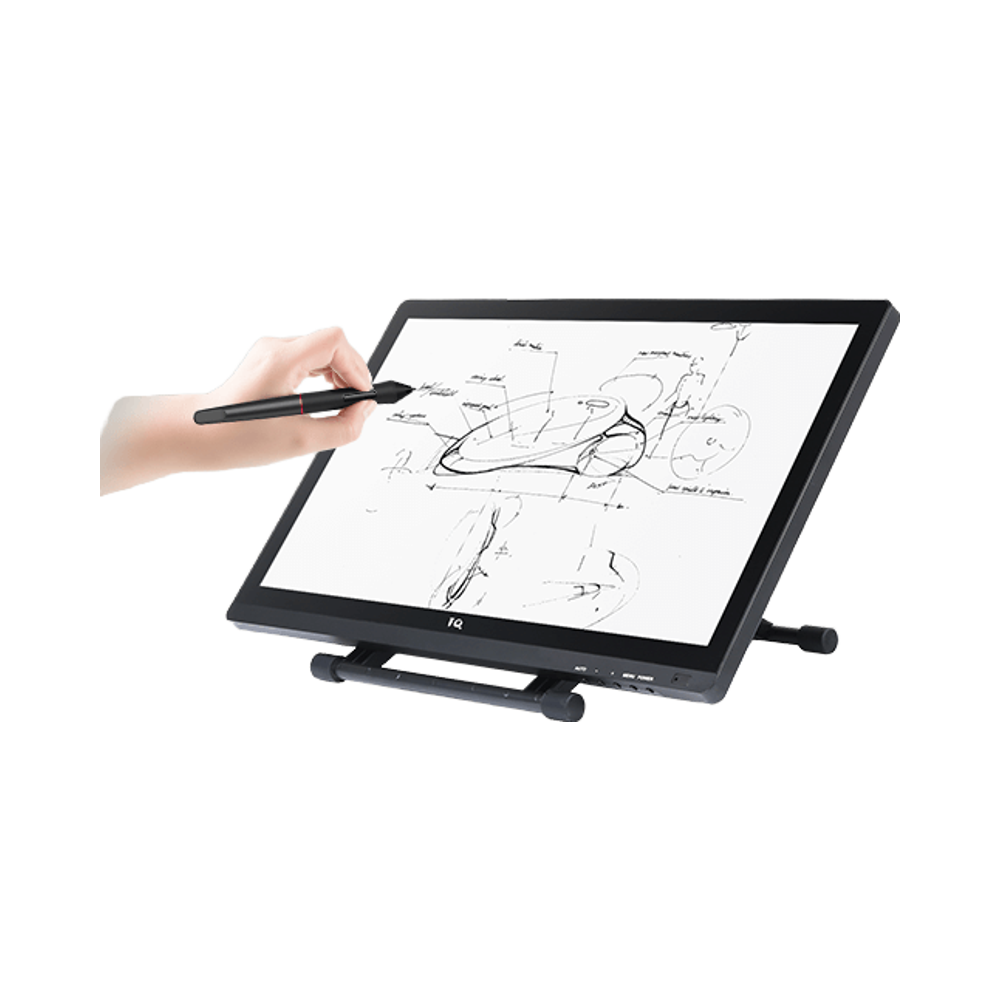
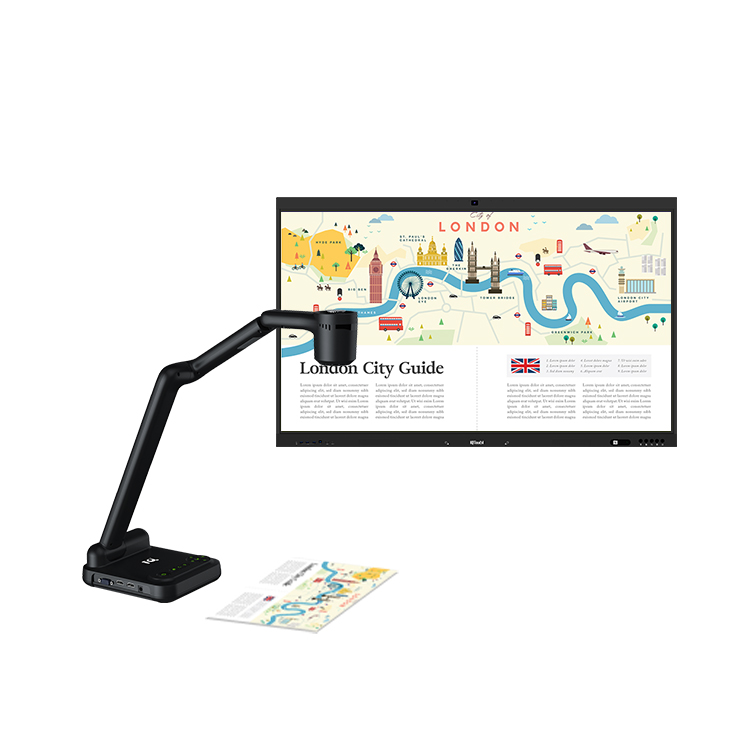
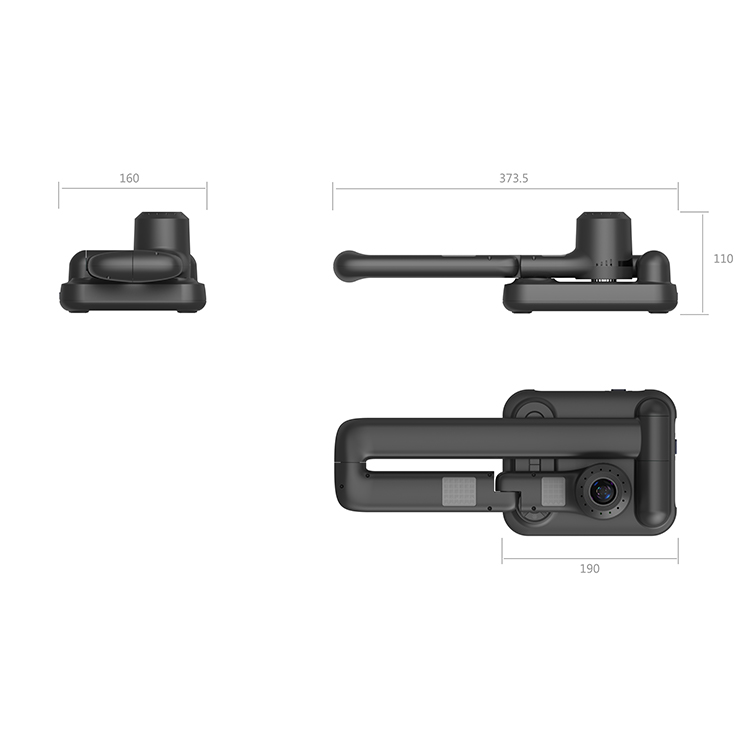
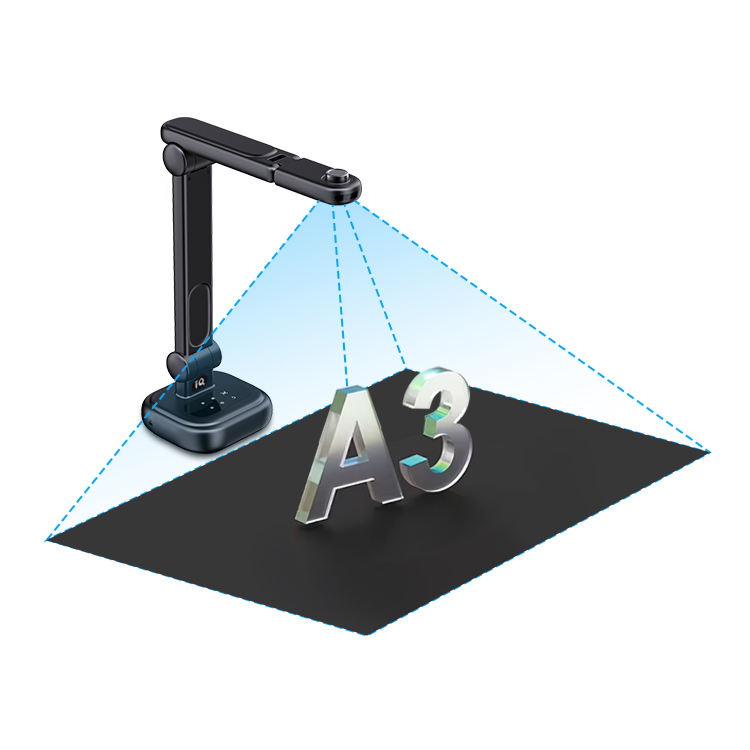
The document camera is the workhorse of K-12 capture. It projects worksheets, textbooks, science demonstrations, and handwritten work at readable resolution. For Phoenix dual-language classrooms, OCR and live annotation let teachers switch between English and Spanish materials without reprinting.
Lecture Capture and Room Camera
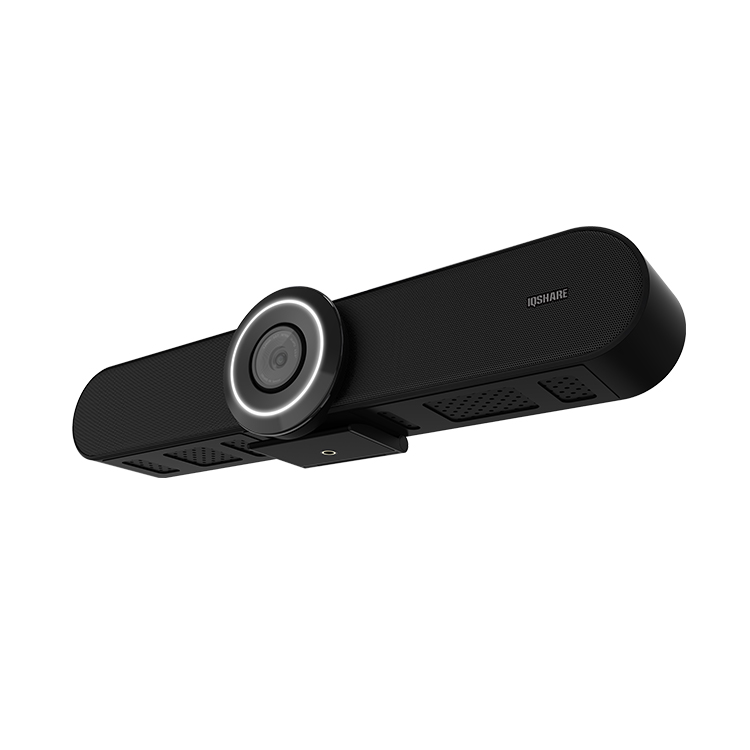
A fixed or 360° room camera captures the presenter and audience for recording and live broadcast. The right field of view depends on ceiling height and room depth; a wide-angle unit can cover a flat-floor classroom, while a larger hall may need a dedicated presenter camera.
Dual-Stream Processing
Dual-stream output combines the presenter and the document or presentation source in one view. This is valuable for online students who need to see both the instructor and the worked problem. It also reduces post-production work for the campus media team.
Interactive Flat Panel
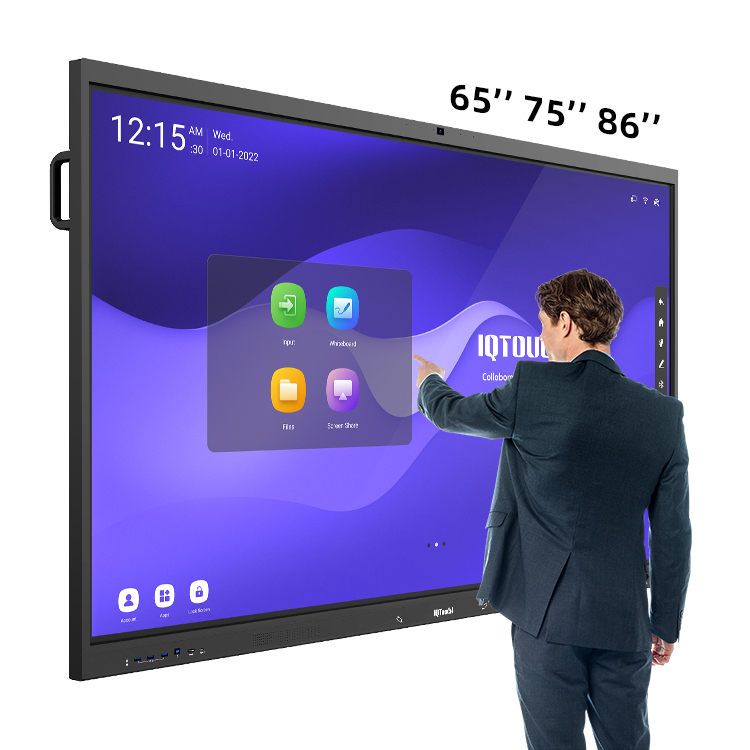
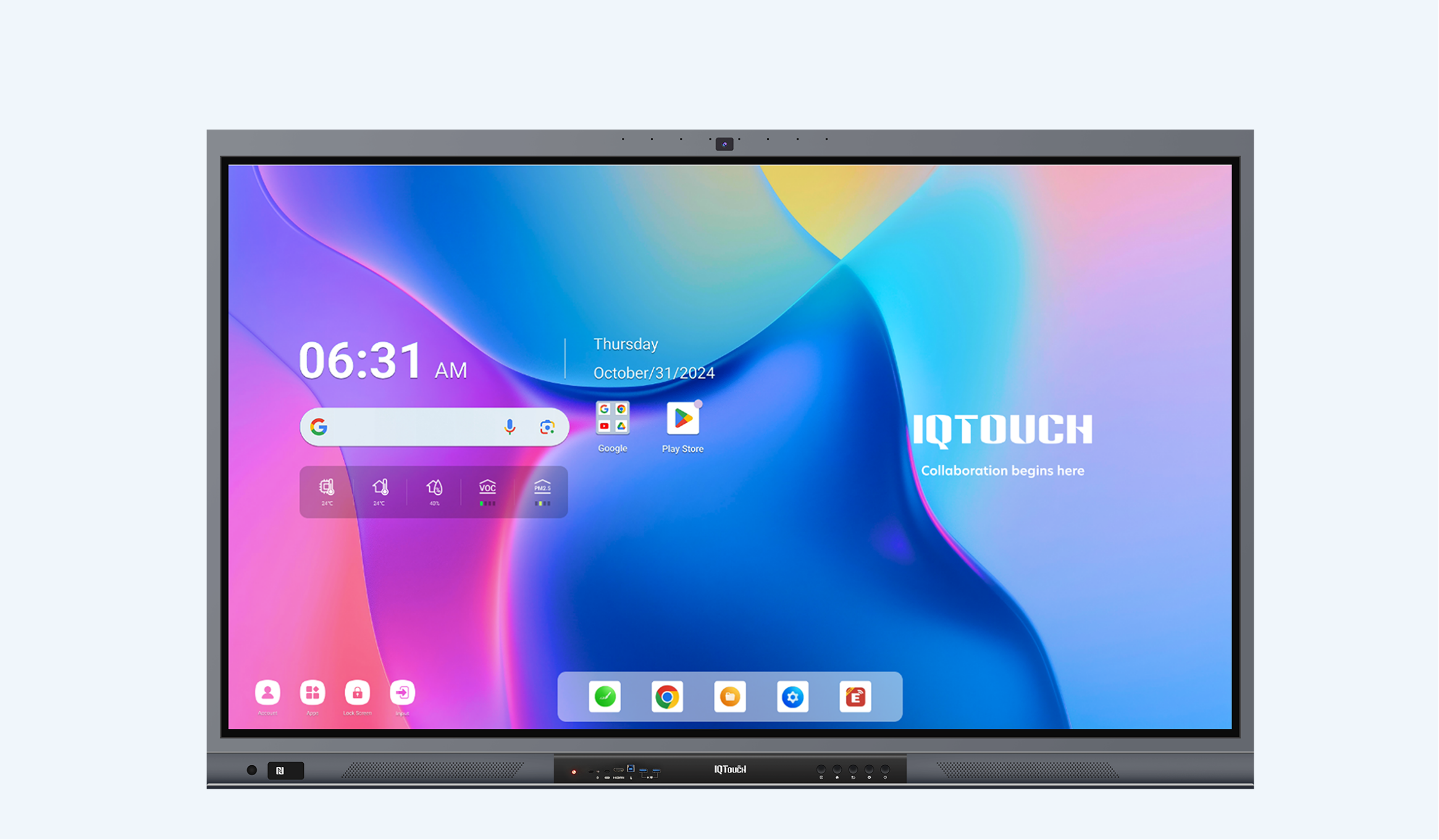
The display is the local teaching surface. A 75- or 86-inch 4K panel gives the instructor room to annotate, share a document camera feed, and run a video call from one screen. In rooms with limited wall space, the panel becomes the capture control point as well.
Networked Smart Podium
A digital podium centralizes source selection, audio, and capture start/stop. For campus standards, a networked podium reduces the number of different control interfaces a lecturer must learn and gives IT a single point for remote support.
Wireless Presentation and Audio
Wireless presentation removes cable clutter and lets visiting instructors connect quickly. In older Phoenix buildings, a wired fallback is still essential; specify a system that supports both, with clear input labeling and no fragile adapters.
Application Scenarios
Phoenix-Area Application Scenarios
The same product family can be configured differently across the metro. These six scenarios reflect how buyers in Phoenix, Tempe, Mesa, Scottsdale, Chandler, and Glendale typically describe their rooms during a needs assessment.
K-12 Dual-Language Classrooms
A 65–86-inch interactive panel paired with an A3/A4 document camera gives teachers a reliable way to present paper materials, annotate in two languages, and record short lessons. The document camera matters more than a ceiling camera in rooms where the instructional action happens on a desk.
University Lecture Halls
A 90–100-inch display, a lecture capture camera, a networked podium, and live broadcast support the scale of ASU, GCU, and community college halls. The priority is sightline coverage, clear audio, and a recording workflow that does not require a dedicated operator.
Workforce and Technical Training
Maricopa Community Colleges and industry training centers need close-up capture of tools, components, and technical documents. A 4K document camera with 10x optical zoom and a durable display outperforms a wide room camera for this use case.
Corporate Innovation Campuses
Hybrid meetings in Tempe, Chandler, and north Phoenix need a 4K USB camera with a built-in microphone and speaker, plus wireless presentation. The goal is a five-minute setup for visiting teams, not a custom control system for every room.
Municipal and Public-Sector Training
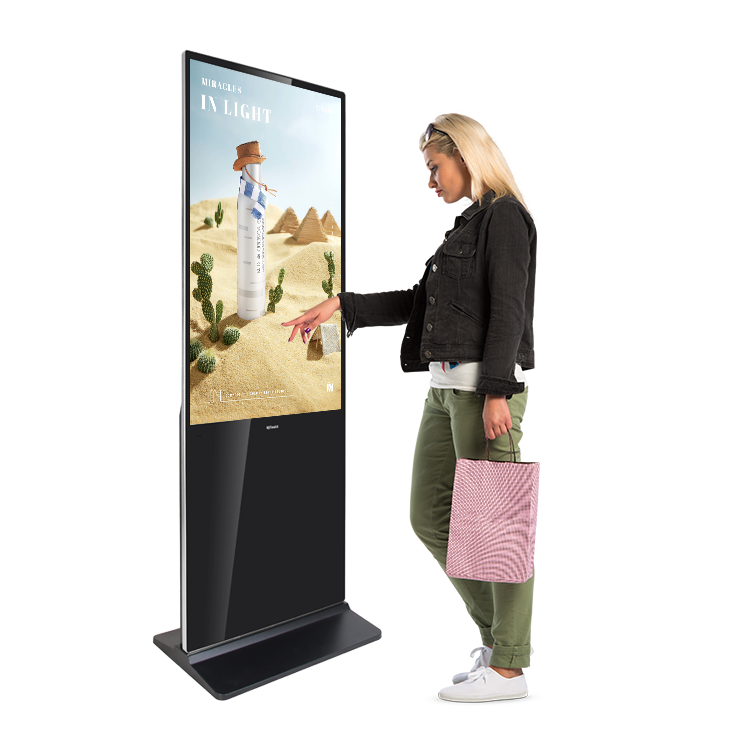
City of Phoenix and Maricopa County training rooms often double as public meeting spaces. A freestanding touch kiosk for wayfinding and a smart podium for presentations reduce staff workload while keeping the room flexible.
Healthcare and Simulation Education
Simulation labs need document capture for anatomy references and close-up procedure demonstrations. Adjustable LED lighting and live annotation are more useful than a wide shot, especially where privacy rules limit recording of participants.
Local Trends
Local Trends Reshaping Lecture Camera Procurement, 2025–2027
Phoenix buyers are moving away from one-off purchases toward repeatable room standards. The six trends below are visible in district RFPs, university AV standards, and corporate workplace guidelines across the Valley.
Hybrid Learning Is Now a Baseline Requirement
Rooms are no longer upgraded for emergency remote teaching. Capture, USB connectivity, and clear audio are expected in everyday classrooms. Procurement teams are writing these requirements into the base specification rather than treating them as add-ons.
4K and Dual-Stream Are Becoming Mainstream
As display prices fall, 4K capture and dual-stream output move from premium lecture halls into standard K-12 and training rooms. The practical benefit is legibility: a 4K document camera can show a full worksheet without losing detail.
AI-Assisted Framing and OCR Reduce Operator Burden
Auto-framing, speaker tracking, and OCR are becoming decision criteria. A camera that can follow the instructor or straighten a document automatically saves setup time and makes student-produced recordings more usable.
Desert-Ready Engineering Is a Differentiator
Phoenix buyers are asking harder thermal and dust questions. Suppliers that can show high and low temperature testing, simulated transport testing, and serviceable fan and filter designs have an advantage over catalog-only competitors.
Compliance Evidence Is Part of the Evaluation
CE documentation, RoHS declarations, FCC statements for wireless modules, and warranty terms are being requested earlier. A polished brochure is no longer enough; the technical file must be reviewable.
OEM/ODM Branding Grows Among Local Integrators
Arizona AV integrators want private-label options to build a local brand and protect margin. Logo, boot screen, packaging, language, and hardware configuration are the most common customization requests.
Lecture Camera and Display Selection Matrix
Recommended lecture camera and display configurations by Phoenix room type
Room Type
Recommended Configuration
Phoenix-Specific Rationale
Small classroom / tutoring room
65–75-inch interactive panel, A3/A4 document camera, 4K USB webcam
High-volume document capture; wayfinding and queue information in public areas.
Campus lobby / student union
Freestanding touch kiosk, 4K display
High-traffic information point; no wall cutting; remote content updates.
Configurations are starting points. Final selection should account for ceiling height, throw distance, sightlines, audio coverage, and the campus network standard.
Proven Strength
Numbers Buyers Can Verify
Every figure below comes from independent third-party inspection or verified platform records, not marketing estimates.
19+
Years in Industry
Confirmed by the latest independent inspection report.
82
Verified Staff
Engineering, production, QC, and export service professionals.
21yrs
Verified B2B Trading
Continuous membership as a paid global supplier.
5/5
Buyer Rating
Average score from verified buyer reviews and transactions.
Manufacturing Strength
Factory Advantages That Matter to Arizona Buyers
Ruyden Interactive Technology Group Co., Ltd. is an SGS onsite-verified manufacturer based in Fuzhou, Fujian, China. We are not a trading company assembling a catalog from unrelated workshops.
Factory-Direct Engineering
A room-level requirement goes directly to the engineers who configure boards, firmware, and packaging. No intermediary rewrites the specification.
Documented Quality
Incoming materials, in-process checks, and final inspection are recorded. Test scope can be shared with your procurement and compliance teams.
OEM / ODM Flexibility
Logo, boot screen, housing color, packaging, pre-installed software, language, and hardware configuration can be customized. Design-based customization has been verified by an independent third-party inspection.
Export and Project Support
Export packing, shipping coordination, spare-parts planning, and technical documentation support distributors and integrators from sample approval to repeat orders.
Our team of 82 people controls SMT, AI auto-insertion, PCB processing, final assembly, testing, and export packing under one roof. For a Phoenix project, that vertical control reduces the distance between a room requirement and a production change.
The factory has 19 years of industry experience, more than 21 years of verified B2B trading activity, and over a decade of export experience. We have participated in international trade shows four times and maintain a 5.0/5.0 buyer rating from verified transactions. Those numbers are useful, but they are not the whole story. The more important question is whether the factory can reproduce a configuration across multiple buildings and ship it without damage.
Our reliability lab is part of the production system, not a marketing photo. Depending on the product and order, units can be checked with high and low temperature testing, drop testing, simulated transportation, salt spray testing, button life cycling, insertion force testing, static testing, earth continuity testing, and withstand voltage testing. For Phoenix, the high and low temperature and simulated transportation tests are particularly relevant: they expose weaknesses that a showroom demonstration never reveals.
In-house SMT, AI auto-insertion, PCB, and final assembly lines.
Reliability testing before packing, with documented results.
OEM/ODM customization verified by independent third-party inspection.
SGS onsite assessment, credit overview, trade capacity, and transaction records available for review.
What We Control In-House
SMT surface mountIn-house
AI auto-insertionIn-house
PCB processingIn-house
Final assemblyIn-house
Reliability test labIn-house
Export packingIn-house
Information gain for buyers: request the test scope, sample photos, and change-control record for the exact configuration you plan to deploy. A factory that can provide these documents is easier to audit and safer to scale.
Factory building and production facility in Fuzhou, Fujian.
Production workshop for interactive displays and capture systems.
Engineering, production, and quality team supporting export projects.
Compliance
CE Documentation and Tender-Ready Compliance for Phoenix Projects
CE marking is a manufacturer’s declaration that a product meets the applicable European Union directives, supported by a technical file and, for many product categories, test reports from an accredited laboratory. It is not a single certificate that can be copied from one product to another.
CE Declaration of Conformity
Model-specific DoC and technical file index for tender review, matched to the exact power supply, wireless module, and firmware configuration.
EMC and Safety Reports
Test scope coordinated with accredited laboratories for the selected configuration, with clear documentation of applicable standards.
RoHS and REACH
Material declarations for restricted substances and environmental review, supporting campus sustainability and procurement requirements.
FCC and Wireless Modules
Module-level documentation and integration notes for U.S. deployments, so CE evidence is not confused with FCC authorization.
Ask for the document scope, not just the logo. A credible supplier will match the declaration to the exact model and provide the test report scope, standards, and issue dates. Buyers should also separate CE evidence from U.S. market requirements: CE addresses European directives, while a U.S. deployment may also require FCC authorization for wireless devices and compliance with local electrical codes.
OEM / ODM Cooperation
From Phoenix Requirement to Factory Build in Six Clear Steps
A repeatable room standard depends on a predictable customization process. The six steps below are the working sequence we use for distributors, integrators, and education tender buyers.
Requirement Review
Share room types, ceiling heights, viewing distances, quantities, target market, and compliance requirements. A floor plan or photo is more useful than a generic model number.
Solution Design
Engineers propose display size, camera field of view, podium configuration, mounting, and software options. We identify any items that require custom tooling or extended lead time.
Sample Approval
A pre-production sample confirms image quality, touch performance, fit, finish, and packaging. You can test the sample against your local network and video platform.
Mass Production
In-house SMT, PCB, and assembly lines build the order. Production records and change notes are kept against the approved sample.
QC and Testing
Reliability lab checks and final inspection are completed before packing. Test reports and inspection photos can be included in the shipment documentation.
Delivery and Support
Export packing, shipping coordination, spare-parts planning, and after-sales support are confirmed. We provide a contact path for technical questions after installation.
FAQ
Frequently Asked Questions from Phoenix Buyers
These are the questions we receive most often from Arizona districts, universities, integrators, and corporate procurement teams evaluating a factory-direct lecture camera supplier.
Are you a manufacturer or a trading company?
We are an SGS onsite-verified manufacturer with in-house SMT, AI auto-insertion, PCB, assembly, testing, and export packing. Our factory is in Fuzhou, Fujian, China, and our team includes engineering, production, QC, and export service staff. Buyers are welcome to review our SGS assessment report, trade capacity, and transaction records before placing an order.
Can you provide CE certification for lecture cameras and document cameras?
We support CE-marked configurations with a model-specific Declaration of Conformity and a technical file package. Depending on the product, the package can include EMC and electrical safety reports, RoHS and REACH declarations, and FCC documentation for wireless modules. Because CE is a self-declaration route, we recommend reviewing the exact standards and test report scope rather than accepting a generic certificate image.
How do you address Phoenix heat, dust, and HVAC cycling?
Thermal and environmental testing are part of our reliability program. Depending on the model and order, units can be tested for high and low temperature operation, simulated transportation, drop, and salt spray. For installation, we recommend avoiding direct sun, keeping clearance around vents, and specifying a service access path. Our engineers can review your mounting plan during the quotation stage.
What is the minimum order quantity and lead time?
MOQ depends on the model, customization level, and whether a sample is required. Lead time is confirmed in the quotation and production schedule; it varies with panel size, hardware configuration, and order volume. We provide a milestone schedule with each purchase order so your installation team can plan.
Do you support OEM and ODM branding for Arizona integrators?
Yes. Common options include logo, boot screen, housing color, packaging, pre-installed software, language settings, and hardware configuration. Design-based customization has been verified by an independent third-party inspection. We can also support private-label documentation and accessory kits for local integrators.
Will your cameras work with our existing LMS and video platform?
Our capture devices output standard video over USB UVC, HDMI, or network streaming depending on the model. Compatibility with a specific LMS, video conferencing platform, or lecture capture software should be confirmed against the exact signal chain. Share your platform and room diagram with our engineers, and we will confirm the supported configuration before you order.
What warranty and after-sales support do you provide?
Warranty terms are stated in the quotation and vary by product and configuration. We support spare-parts planning, remote diagnostics, and technical documentation for integrators. For campus rollouts, we recommend agreeing on a spare-unit ratio and a return/repair workflow before the first installation.
How should a Phoenix buyer start a project?
Send your room types, quantities, target installation date, compliance checklist, and any existing AV standard. If you have floor plans or photos, include them. Our export team will respond with a configuration proposal, documentation scope, and sample plan. Use the inquiry button on this page to start the conversation.
Start Your Project
Request a Phoenix-Ready Lecture Camera Configuration
Send your room schedule, ceiling heights, viewing distances, and compliance checklist. Our engineering team will return a room-by-room configuration with model numbers, capture coverage, and the CE documentation scope required for your tender.
Send an InquiryFactory-direct technical review for Phoenix distributors, integrators, education buyers, and corporate training teams.