Eight Verified Products Often Bundled with Wireless Display Adapters
A wireless display adapter is only one node in a room. Cologne buyers usually specify audio, camera capture, lectern control, document capture and digital signage in the same bill of materials. The eight production items below come from the same SGS-verified manufacturing ecosystem and are frequently quoted alongside 4K wireless presentation kits.
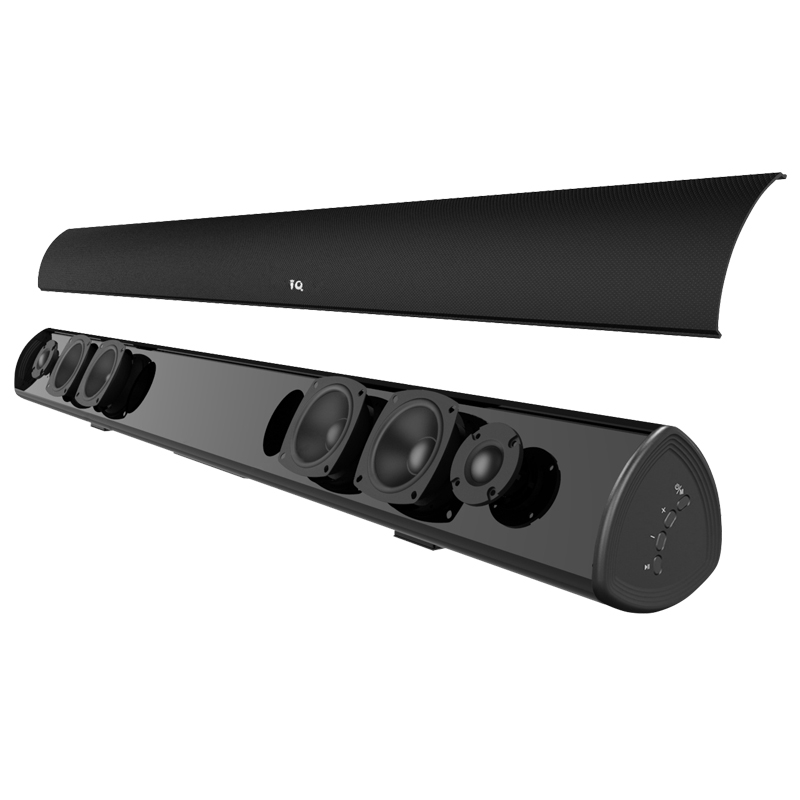
Soundbar for Meeting Room and Classroom Remote Control Speaker
Clear voice pickup for hybrid rooms where wireless sharing must be paired with intelligible audio.
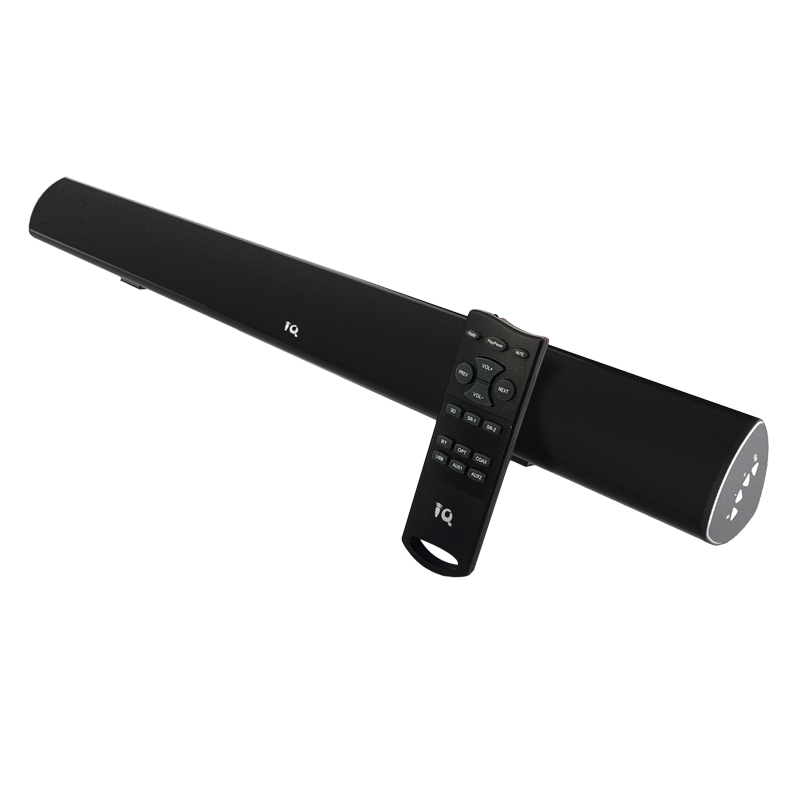
IQSoundbar Wholesale Office Conference Room Audio Sound Bar TV Soundbar with Subwoofer Active Speaker
Scalable conference audio for boardrooms, training rooms and hotel meeting spaces.
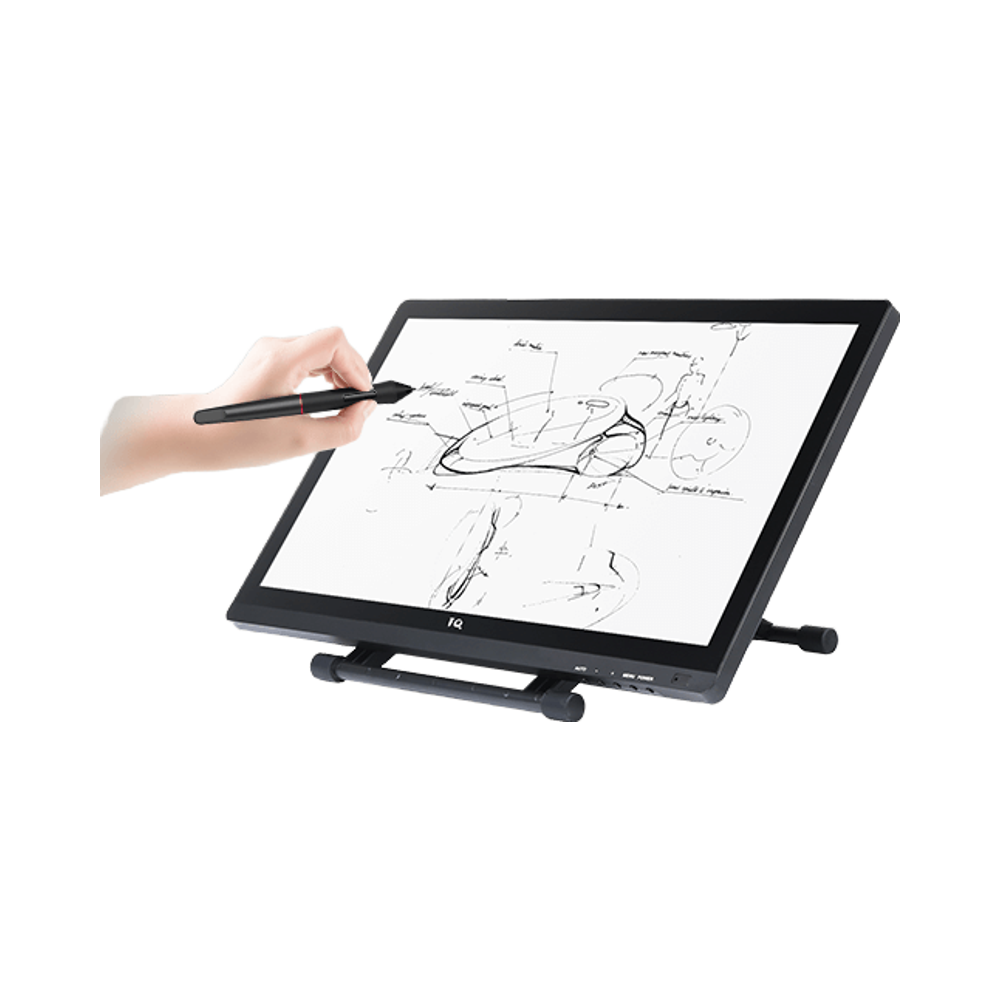
22" Touch Screen Digital Smart Podium with Wireless Microphone for Sale
Presentation control and wireless microphone support for lecture theatres and conference stages.
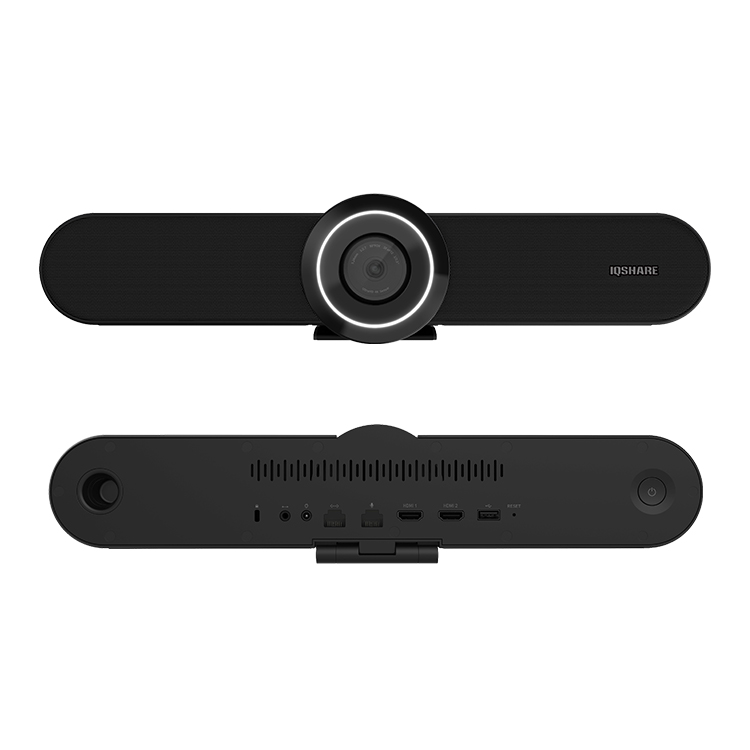
All in One Conference System USB Ultra HD 4K Outdoor Pc Webcam 4k Autofocus with Built in Speakerphone and 2 Mics
Plug-and-play video capture for hybrid teaching rooms and corporate meeting spaces.
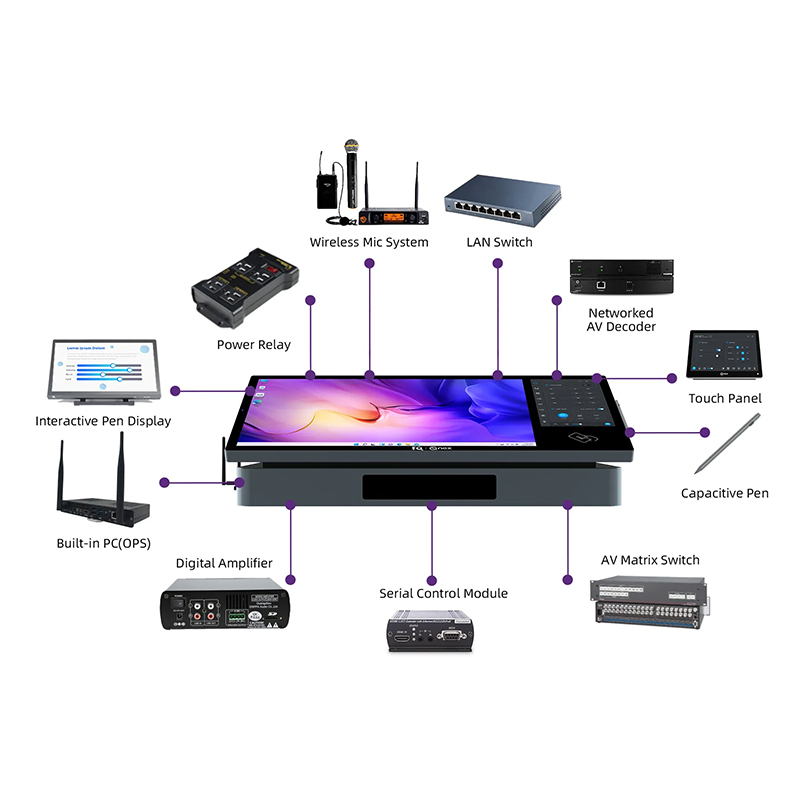
Android System Education Classroom Control Smart Digital Lectern Desktop Digital Podium
Centralised in-room control for displays, audio and campus AV workflows.
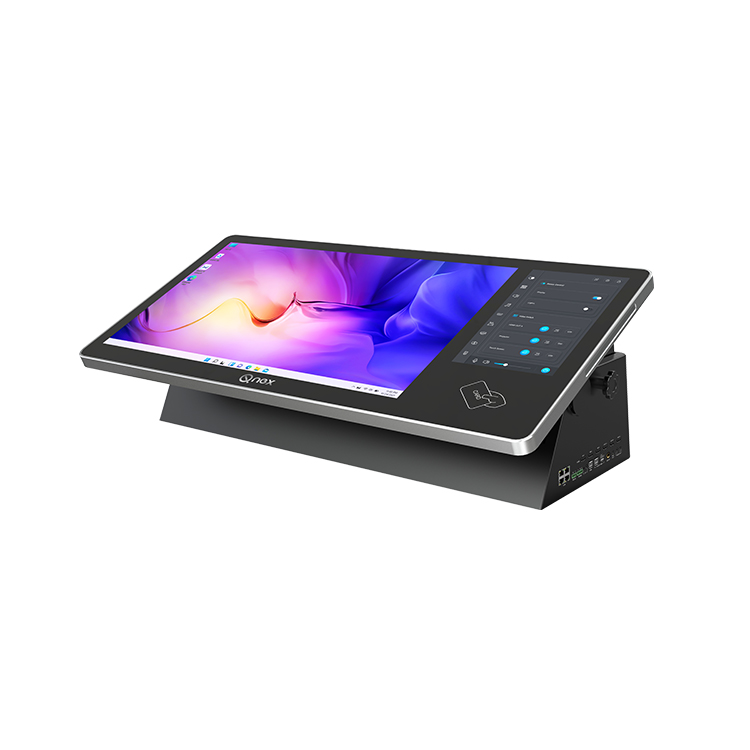
China Supplier Educational Equipment Customizable Integrated Multifunctional Desktop Digital Podium Factories
Customizable lectern platform for tender projects and distributors serving German-speaking markets.
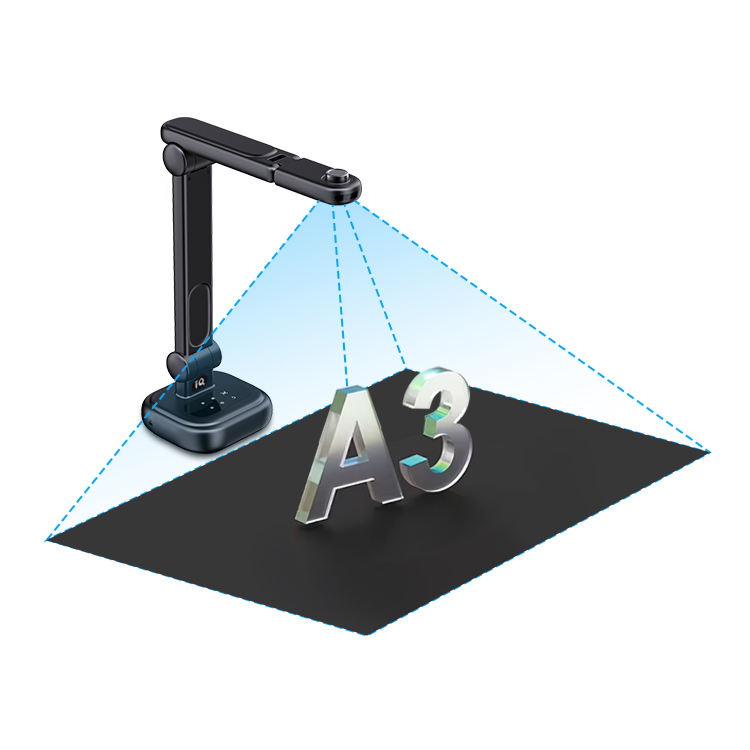
4K Camera Folding Design Live Annotation Adjustable LED Lighting Dual Stream A3 A4 Document Book Camera Scanner
High-resolution document and object capture for training, legal review and hybrid classrooms.
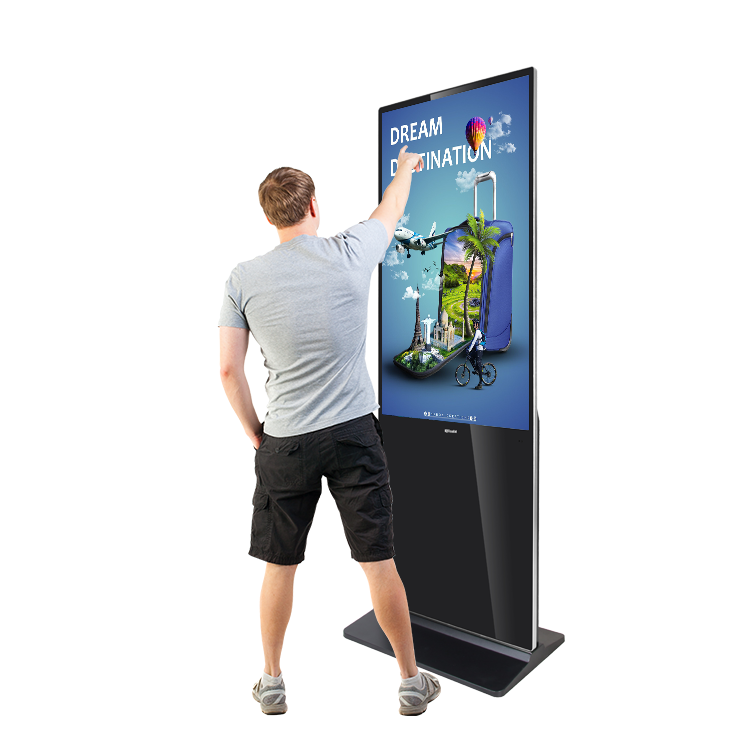
Wholesale 43inch Android Tablet Floor Standing Touch Kiosk for Hotel Bank School
Floor-standing touch signage for hotel lobbies, exhibition wayfinding and campus information points.
Years in Industry
Education and enterprise AV manufacturing experience confirmed by third-party inspection records.
Verified Staff
Engineering, production, QC and export service professionals supporting global projects.
Buyer Rating
Average score from verified buyer reviews and transaction records shown on public profiles.
Onsite Verified
Independent supplier assessment covering production capacity, QA/QC and trade capabilities.
Why Cologne Is a High-Standard Market for Wireless Display Adapters
Cologne is compact geographically but demanding technically. Its exhibition calendar, hotel infrastructure, universities, municipal buildings and Rhine-Ruhr industrial base create very different room types — and very different acceptance tests.
Cologne combines one of Europe’s busiest exhibition and conference ecosystems around Koelnmesse, a dense hotel and event venue network in Deutz and the city centre, corporate offices in Ehrenfeld and Rheinauhafen, and large public institutions including the University of Cologne and TH Köln. A wireless display adapter specified for a Cologne hotel lobby is judged in seconds: does it connect on the first attempt, without downloading an app, while keeping guest devices isolated? A university seminar room adds HDCP compatibility, stable 4K, secure firmware and integration with lecture capture. A municipal building adds DSGVO/GDPR documentation, CE-RED evidence, German-language manuals and long-term spare-part planning.
For procurement teams, the question is not simply “which wireless dongle is cheapest?” The real question is which factory can supply a repeatable room standard that survives tenders, hotel brand audits, university IT reviews and public-sector documentation checks. Cologne projects are won on integration-risk reduction, not on the lowest unit price. That is why experienced buyers compare factory capability, firmware control, compliance files, test-lab evidence and after-sales depth before they compare a 4K@30 kit with a 4K@60 kit.
Hotels & Koelnmesse-Area Event Spaces
Guest presenters arrive with mixed laptops, tablets and phones. App-free pairing, guest network isolation, HDCP support and fast room reset matter more than a long feature list.
University of Cologne & TH Köln Teaching Rooms
Hybrid lectures require stable wireless presentation, capture cameras, digital podiums and clear audio. IT teams expect firmware discipline and documented security behaviour.
K-12 Schools & DigitalPakt-Funded Rooms
Teachers need one-click sharing without app installation or complex pairing. Administrators need central management, spare parts and clear German-language instructions.
Corporate Boardrooms in Deutz & Rheinauhafen
Financial, legal and media companies expect encrypted wireless presentation, dual HDMI inputs and reliable switching between Microsoft Teams, Zoom and in-room systems.
Public Administration, Healthcare & Legal Settings
DSGVO/DSGVO-aligned deployment, no forced cloud dependency and local pairing workflows help reduce data-protection review friction during public tenders.
Rhine-Ruhr Industrial Training Centres
Wireless presentation must remain stable in RF-heavy environments. 5GHz planning, channel scanning and optional wired fallback protect daily training schedules.
Top 10 Screening Criteria for a Wireless Display Adapter Factory
This is the practical meaning of a “top 10” factory shortlist for Cologne: not ten slogans, but ten evidence points that separate a factory-grade supplier from a trading intermediary.
| Screening Question | What Strong Evidence Looks Like | Why Cologne Buyers Care |
|---|---|---|
| 1. Is the factory real? | SGS onsite verification, public factory address, production video, headcount and trade records. | Reduces deposit risk and supports tender due diligence. |
| 2. Are critical boards in-house? | SMT, AI insertion, PCB processing and final assembly under one roof. | Better consistency, faster engineering changes and protected custom designs. |
| 3. Who controls firmware? | Clearly documented firmware release process, version logs, rollback planning and security response. | Wireless presentation is software-dependent; lifecycle support affects room uptime. |
| 4. Is EU compliance ready? | CE-RED evidence for wireless devices, EMC/LVD where applicable, RoHS, REACH, WEEE/ElektroG and packaging compliance files. | German importers and public buyers need documents before shipment, not after arrival. |
| 5. Is the adapter privacy-safe? | No forced app, no mandatory cloud account, local pairing, guest isolation and clear data-flow explanation. | DSGVO/GDPR reviews are simpler when the device does not collect unnecessary data. |
| 6. Can it survive real rooms? | High/low temperature, drop, simulated transportation, salt spray, button life, insertion force, static, earth continuity and withstand-voltage testing. | Hotel, school and campus rooms demand low failure rates and predictable spare-part plans. |
| 7. Can it be branded? | Verified OEM/ODM customization for logo, boot screen, housing colour, packaging, language and preinstalled software. | Distributors and integrators need a locally owned product presentation, not a generic dongle. |
| 8. Is support local enough? | English and German documentation support, RMA path, spare dongles, power adapters and critical modules. | Cologne service teams need fast replacement to protect SLAs and customer satisfaction. |
| 9. Does it integrate? | Compatibility with soundbars, 4K cameras, digital podiums, document cameras and central AV control. | Most projects are room solutions, not isolated adapter purchases. |
| 10. What is lifecycle TCO? | Power consumption, dongle replacement cost, warranty terms, firmware maintenance plan and lead-time stability. | Professional buyers compare total cost across a campus, not a one-off unit price. |
A useful shortlist rule for Cologne tenders: ask for evidence in the same format you will need for your technical file — declaration of conformity, test reports, firmware policy, spare-parts list and product images with display interface labels.
What Professional Buyers Weight in a Cologne Room Rollout
Price always matters, but it rarely ranks alone. The illustrative weighting below reflects the criteria professional AV buyers commonly balance when comparing wireless display adapter suppliers for multi-room projects.
Illustrative procurement weighting, not a statistical survey. The right weighting should reflect your room criticality, tender rules, internal IT policy and service model.
Recommended Wireless Display Adapter Configurations for Cologne Rooms
Forget one adapter for every room. A hotel event suite, a university lecture hall and a primary school classroom need different trade-offs between latency, resolution, security and ease of reset.
Cologne Hotel & Event Spaces
Recommended: 4K@30 wireless HDMI kit, dual-band 5GHz, HDMI + USB-C input, 1-to-8 presenter sharing, guest SSID isolation, no-app connection and HDCP support.
- Fast room reset between events
- No permanent software installed on guest laptops
- Bundle with conference soundbar and digital signage kiosk
University & Enterprise Rooms
Recommended: 4K@60 wireless presentation with dual HDMI, USB-C, central management, signed firmware, VLAN-friendly deployment and optional wired fallback.
- Integrates with 4K conference cameras and networked podiums
- Supports lecture capture and hybrid meeting workflows
- Clear firmware lifecycle documentation for IT review
K-12 Classroom & Training Bundle
Recommended: 1080p/4K@30 teacher-first wireless kit with 5GHz stability, one-click pairing, student/teacher toggle and simple on-screen instructions in German and English.
- Pairs with document camera, smart podium and classroom soundbar
- Minimises teacher training time and IT tickets
- OEM packaging and boot-screen branding available
Six Localized Trends Shaping Wireless Display Procurement in Cologne
The German market rarely adopts technology for novelty alone. In Cologne, adoption is driven by hybrid meeting equity, data-protection certainty and the cost of room downtime.
Hybrid Equity Becomes the Brief
Remote participants must see the same content as the room. Wireless presentation now shares the specification with camera framing, audio pickup and lecture capture.
App-Free BYOD Is the Baseline
Guests and teachers expect to connect from a laptop, tablet or phone without installing software. No-app pairing reduces support calls and improves room readiness.
4K Is Table Stakes; Latency Is the Differentiator
Resolution alone no longer wins. Buyers compare latency, HDCP handling, frame stability and how quickly the system recovers after a presenter disconnects.
DSGVO Moves into AV Checklists
Public institutions and healthcare buyers ask where data flows. Local pairing, no forced cloud account and clear logging policy simplify DSGVO reviews.
Managed AV Replaces Ad-Hoc Dongles
Campus and multi-site operators want central visibility, consistent firmware and spare dongles. A room standard reduces variation across buildings.
Sustainability & Logistics Become Procurement Criteria
Packaging compliance, WEEE/ElektroG readiness, energy use and road/air logistics via Cologne/Bonn or Rhine ports are now part of supplier scoring.
Inside the Factory Behind the Adapter: Evidence, Not Claims
Ruyden Interactive Technology Group Co., Ltd. is an SGS onsite-verified manufacturer and exporter of interactive displays, lecture capture systems, networked digital podiums and smart classroom AV solutions. For Cologne buyers, that breadth matters because a wireless adapter rarely ships alone.
Headquartered in the Fuzhou High-tech Zone, Fujian, China, the company combines in-house SMT, AI automatic insertion, PCB processing and final assembly with a dedicated reliability test lab. The production model gives distributors, system integrators and tender buyers a direct line to the factory that builds and validates the unit — not a chain of intermediaries. Design-based customization has been verified by independent third-party inspection, covering logo, boot screen, housing colour, packaging, preinstalled software, language settings and hardware configuration.
For a Cologne deployment, the useful proof is not a slogan. It is the ability to show SGS onsite verification, 19 years in industry, 82 verified staff, a 5.0/5 buyer rating, in-house test-lab processes, OEM/ODM records and export experience exceeding ten years. These are the documents procurement teams can review before committing to samples, tooling or a multi-room rollout.



SGS Onsite Verification
Independent assessment and publicly viewable supplier records reduce buyer risk and support tender due diligence.
In-House SMT, AI & PCB
Critical production steps stay under one roof, protecting custom hardware designs and enabling faster engineering changes.
Reliability Test Lab
High and low temperature, drop, simulated transportation, salt spray, button life, insertion force, static, earth continuity and withstand-voltage testing.
Verified OEM / ODM Customization
Logo, boot screen, housing colour, packaging, software preinstallation, language settings and hardware configuration can be aligned to your market.
One Connected Smart-Room Ecosystem
Displays, lecture capture, digital podiums, wireless presentation, audio and AV control can be specified together for simpler procurement.
Export Experience for European Buyers
More than ten years of export experience, international exhibition participation and support for distributors, integrators and project buyers.
From Inquiry to Cologne Delivery in Six Clear Steps
A structured workflow keeps importers, distributors, integrators and tender teams aligned from requirement review to after-sales support.
Requirement Review
Share room types, quantities, target market, latency expectations, compliance needs and packaging language.
Solution Design
Engineers propose wireless presentation configuration, room peripherals, software settings and branding options.
Sample Approval
Pre-production samples confirm appearance, interface, performance and documentation before tooling or mass production.
Mass Production
In-house SMT, PCB, AI insertion and assembly lines build the approved order under production controls.
QC & Testing
Reliability-lab checks and final inspection are completed before export packing and shipment release.
Delivery & Support
Export packaging, shipping coordination to NRW/EU destinations and after-sales service planning.
Local Procurement Questions Asked by Cologne & NRW Buyers
Practical answers for hotels, schools, universities, integrators and corporate AV teams preparing a wireless display adapter inquiry.
Which EU compliance documents should accompany a wireless display adapter for Cologne?
For wireless devices, buyers normally request CE-RED evidence, EMC documentation, RoHS and REACH declarations, WEEE/ElektroG registration information where applicable, packaging compliance details and an EU declaration of conformity. Confirm the exact category and responsibilities with your importer or compliance advisor before tender submission.
Can you support German-language manuals, labels and packaging?
Yes. OEM/ODM customization can cover language settings, printed quick-start guides, label content and retail or tender packaging. Final wording should be approved by your local importer or compliance partner to ensure it matches German market requirements.
How do you address DSGVO/GDPR and guest privacy in hotels or public buildings?
We recommend configurations that avoid forced cloud accounts, support local pairing, isolate guest devices and minimise data collection. For public-sector or healthcare projects, request a written data-flow description and choose managed features that fit your organisation’s DSGVO review.
What is the usual sample and MOQ process for a first Cologne project?
Most buyers begin with a configuration review, then approve one or more pre-production samples before mass production. MOQ depends on branding, packaging, firmware requirements and the selected hardware platform; it is confirmed in the quotation so that pilot rooms and campus rollouts can be planned realistically.
Do you support OEM/ODM branding and firmware changes?
Yes. Design-based customization has been verified by independent third-party inspection. Typical options include logo, boot screen, housing colour, packaging, preinstalled software, language settings and hardware configuration. Firmware changes should be scoped through the sample and approval process.
How can we reduce 5GHz interference in hotels and trade-fair venues?
Plan the room standard around 5GHz operation, channel scanning, guest network isolation and clear fallback options. For high-density sites, avoid sharing the same congested SSID as guest Wi-Fi and test the adapter in the actual room before rolling it out across multiple suites or halls.
What should be agreed for lead time, warranty and spare parts?
Put lead time, warranty terms, RMA handling, critical spare modules and firmware support into the contract or purchase order. For multi-room projects, keep spare dongles, power adapters and selected boards to protect SLAs and avoid room downtime.
How do we start a wireless display adapter project from Cologne or NRW?
Send your room types, estimated quantities, target resolution and latency, DSGVO requirements, compliance documents needed, packaging language and desired delivery schedule. Our export team can then return a configuration proposal, sample plan and document checklist for your project.
Need a Factory-Verified Wireless Display Adapter Shortlist?
Share your room count, latency target, EU compliance requirements and packaging language. We will respond with a configuration proposal for your Cologne or NRW rollout, including relevant product models, testing evidence and OEM/ODM options.
